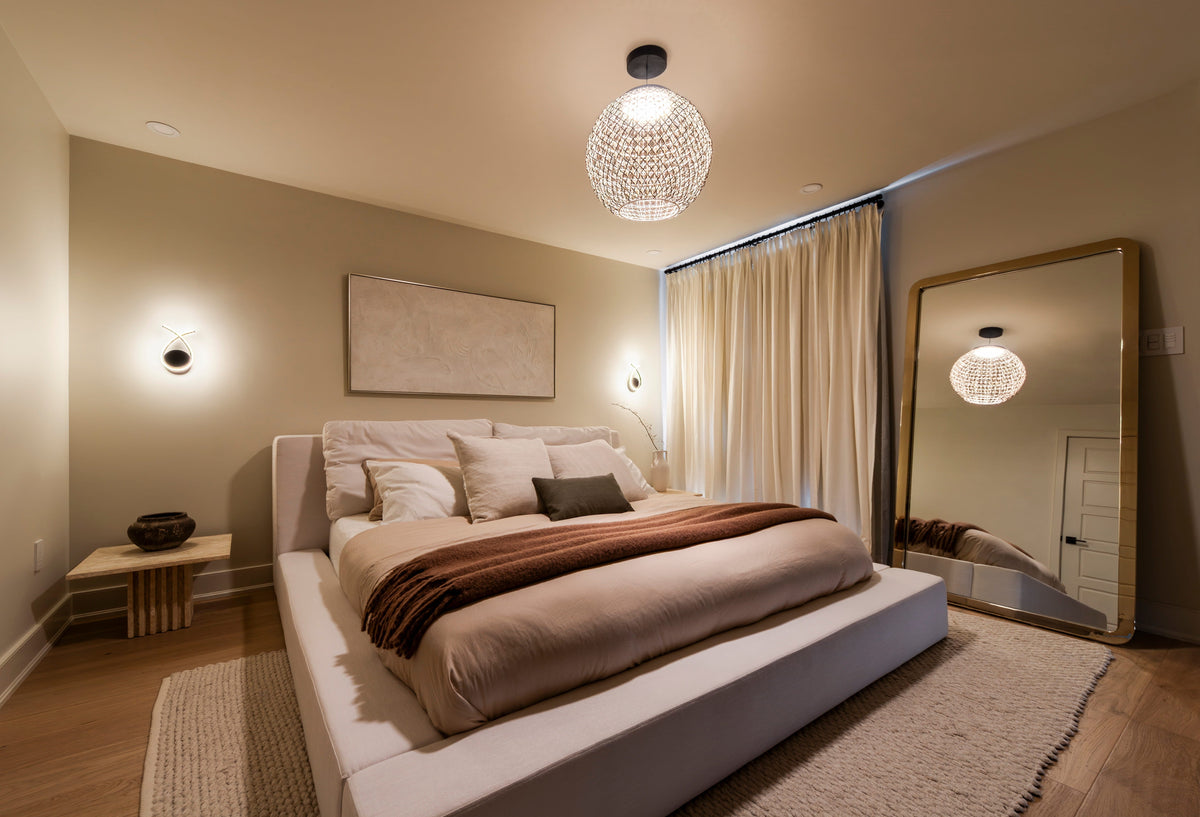
CCT (correlated colour temperature) describes how warm or cool a light looks, measured in Kelvin (K), from cozy yellowish tones to bright bluish white.
Choosing the right colour temperature can completely transform how a room feels. Pick too warm, and your kitchen might feel dim. Go too cool, and your bedroom loses its cozy vibe. Understanding CCT helps you create the perfect atmosphere in every space while making sure your lighting looks cohesive throughout your home.
What Is CCT in Lighting?
CCT stands for correlated colour temperature. It measures how warm (yellowish) or cool (bluish) a light appears, using the Kelvin (K) scale. Lower Kelvin numbers produce warm, amber light similar to candlelight or sunset. Higher Kelvin numbers create cool, bright white light that resembles midday sun.
The term "correlated" comes from how the scale relates to the colour of light emitted by heated metal. As metal heats up, it glows from red to orange to yellow to white to blue. This same principle applies to how we measure light colour, even though modern LEDs don't actually heat up to produce light.
Important distinction: CCT tells you the colour appearance of light (warm or cool), while CRI (Colour Rendering Index) measures how accurately colours look under that light. Both matter, but they measure different things.
The CCT Scale Explained: What the Numbers Mean
2200K to 2700K: Extra Warm, Cozy, Candlelit
This range produces a soft, amber glow that feels intimate and relaxing. It's perfect for:
- Bedrooms where you want to wind down
- Living rooms for movie nights
- Outdoor string lights on patios
- Dining rooms for romantic dinners
3000K: Warm White, Modern and Welcoming
The most popular choice for modern homes. It's warm enough to feel inviting but bright enough to see clearly. Ideal for:
- Kitchens and dining areas
- Bathrooms for a spa-like feel
- Hallways and entryways
- Open-concept living spaces
Many of Artika's residential fixtures, including the Tivoli 5 CCT LED Vanity Light and Optical 3 CCT LED Pendant, offer 3000K as one of their tunable settings.
3500K to 4000K: Neutral White, Bright but Not Blue
This neutral range provides crisp, clean light without the yellow or blue cast. Best for:
- Home offices where you need to focus
- Laundry rooms and mudrooms
- Garages and workshops
- Task lighting in kitchens
5000K to 6500K: Daylight, Cool White
This cool, energizing light mimics natural daylight. Use it for:
- Detailed craft or hobby work
- Workshop and garage task lighting
- Reading areas where clarity matters
- Security and outdoor floodlights
Why Does Colour Temperature Matter?
CCT and Mood: Creating the Right Atmosphere
Warmer colour temperatures (2700K-3000K) trigger relaxation. They signal your brain that it's evening time, making them perfect for spaces where you unwind. Cooler temperatures (4000K-5000K) promote alertness and focus, which is why offices and workspaces benefit from neutral to cool lighting.
CCT and Visual Consistency
Mixing very different colour temperatures in the same room or open floor plan creates an uneven, patchy appearance. Your brain notices when one fixture casts yellow light while another nearby casts blue-white light. This inconsistency can make spaces feel disjointed and less polished.
CCT and Perceived Brightness
Here's something surprising: cooler light often feels brighter even at the same lumen level as warm light. This is why 3000K at 800 lumens can seem less intense than 5000K at 800 lumens, even though they produce the same amount of light.
How to Read CCT on Product Labels
Most lighting products display colour temperature clearly on the box or product page. Look for:
- "colour Temperature: 3000K" on spec sheets
- Icons showing warm/neutral/daylight options
- Marketing terms like "Soft White" (2700K), "Warm White" (3000K), "Bright White" (4000K), or "Daylight" (5000K-6500K)
If a product doesn't list its Kelvin rating or uses vague terms like "white" without numbers, that's a red flag. Quality fixtures always specify CCT clearly.
Choosing the Right CCT for Every Room
Living Room & Bedroom: Warm and Relaxing (2700K to 3000K)
These spaces benefit from warm lighting that helps you decompress. Use 2700K for maximum coziness or 3000K for a slightly brighter, more modern feel.
Kitchen & Dining: Warm to Neutral (2700K to 3500K)
Kitchens need bright enough light for safe food prep but warm enough to feel welcoming. Most homeowners choose 3000K as the sweet spot. For task lighting over counters, 3500K works well.
Bathroom: Neutral for True Colours (3000K to 3500K)
You need to see accurate colours when applying makeup or choosing outfits. Neutral white around 3000K-3500K provides clarity without the harsh blue cast of daylight bulbs. Artika's DNA Integrated LED Vanity Light and Bubble Cube Integrated LED Vanity Light offer excellent colour accuracy in this range.
Home Office: Neutral to Cool for Focus (3500K to 5000K)
Cooler temperatures help maintain alertness during work hours. If you work from home, choose 4000K for all-day comfort or install tunable white fixtures that let you adjust throughout the day.
Outdoors: Match the Vibe
For cozy patios and entertaining areas, use 2700K-3000K to extend your indoor ambiance outside. For driveways, walkways, and security lighting, 4000K-5000K provides better visibility and safety. Browse Artika's outdoor LED lighting collection for weather-ready options in multiple colour temperatures.
Can You Mix Different CCTs in the Same Space?
When Mixing Works
Layering different colour temperatures can work if you're intentional. For example, 3000K overhead lighting with 2700K table lamps creates depth without looking mismatched. Keep the difference small (within 500K) and use the warmer temperature for accent or ambient lighting.
When Mixing Looks Bad
Avoid pairing 2700K and 5000K in the same sightline. The contrast is too jarring, and your space will look like it has competing lighting schemes. This often happens when someone replaces just one bulb without checking the colour temperature.
How to Fix Mismatched Colour Temperatures
If your room has patchy lighting with different colour casts, replace the outlier bulbs to match your target temperature. For most homes, standardizing at 3000K throughout creates a cohesive, modern look. Keep spare bulbs on hand so you can maintain consistency.
Tunable White: One Fixture, Multiple Moods
Tunable white or adjustable CCT fixtures let you change colour temperature with a switch, remote, or app. Artika offers several tunable options, including fixtures that switch between 3000K, 4000K, and 5000K.
Benefits include:
- Morning to evening flexibility: Start with energizing 4000K during work hours, switch to relaxing 3000K in the evening
- Multipurpose rooms: Adjust based on whether you're working, entertaining, or relaxing
- No bulb changes needed: One fixture adapts to every need
The Optical 3 CCT LED Pendant and Tivoli 5 CCT LED Vanity Light are excellent examples of this technology in action.
What Is the Difference Between Warm White and Daylight Bulbs?
Warm white bulbs (around 2700K-3000K) produce soft, cozy light with a slight yellow or amber tone, similar to traditional incandescent bulbs. They create a relaxing atmosphere perfect for living spaces and bedrooms.
Daylight bulbs (around 5000K-6500K) produce crisp, white light that mimics natural midday sun. They look more blue-white and feel energizing, making them ideal for task-oriented spaces like workshops, garages, and offices.
Neither is inherently better. The right choice depends entirely on the room's purpose and the mood you want to create.
Is Higher Kelvin Always Brighter?
No. Kelvin measures colour temperature, not brightness. A 5000K bulb at 800 lumens produces the same amount of light as a 2700K bulb at 800 lumens. However, the 5000K bulb may feel brighter because our eyes perceive cool, blue-toned light as more intense than warm, yellow-toned light at the same lumen output.
If you want actual brightness, look at lumens, not Kelvin.
How to Choose the Best Colour Temperature for Your Home?
Understanding colour temperature transforms how you light your home. Warm temperatures (2700K-3000K) create cozy, relaxing environments perfect for living spaces and bedrooms. Neutral temperatures (3500K-4000K) provide focused, clear light for workspaces. Cool temperatures (5000K+) offer energizing illumination for detailed tasks.
For the most flexible approach, consider Artika's tunable white fixtures that adapt to your needs throughout the day. Whether you're upgrading a single room or planning whole-home lighting, choosing the right CCT ensures every space looks and feels exactly as you intended. Explore Artika's complete collection of indoor LED lighting to find fixtures with the perfect colour temperature for your home.