
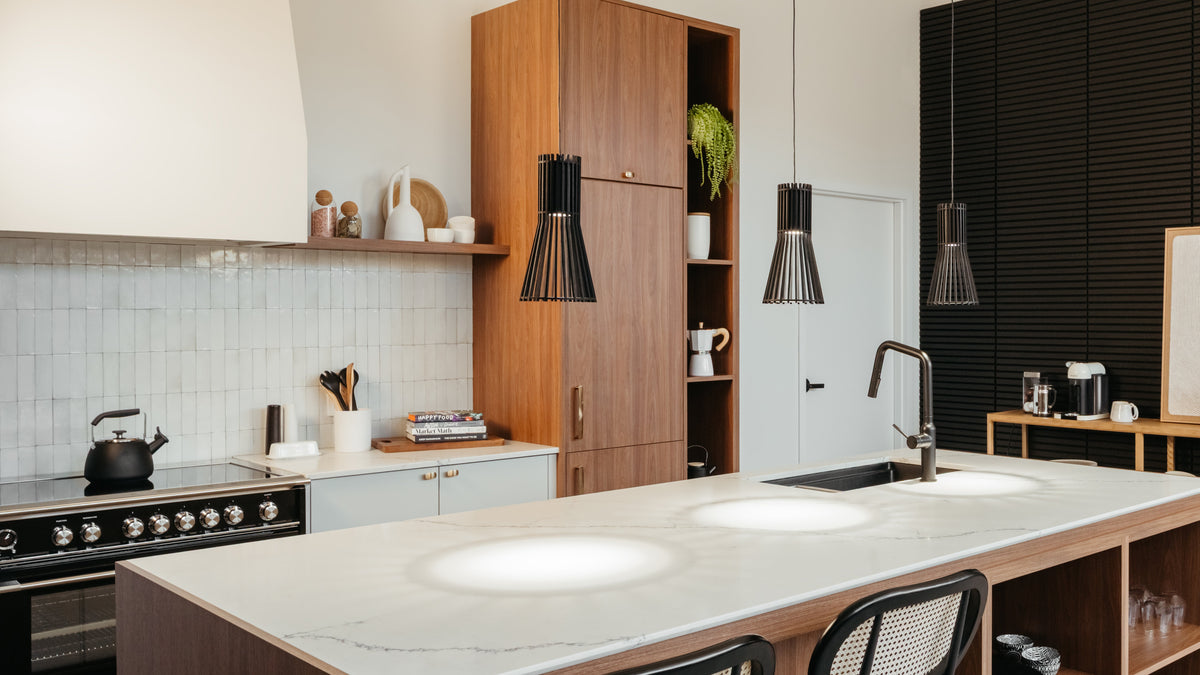
Lumens measure the total amount of visible light a bulb or fixture produces, so more lumens means a brighter light.
Shopping for lighting used to be simple. You grabbed a 60-watt bulb for the bedroom, a 100-watt bulb for the kitchen, and called it a day. Today, with energy-efficient LEDs, watts no longer tell you how bright a light will be. That's where lumens come in. Understanding lumens helps you choose lighting that's bright enough without being overwhelming, saving energy while getting the exact ambiance you want.
What Are Lumens?
Lumens measure how much visible light a bulb or fixture produces. Think of it as the total light output. A higher lumen number means more light, while a lower number means dimmer light. It's that straightforward.
Lumens vs Watts: Why Old Habits Cause Confusion
For decades, we used watts to judge brightness because incandescent bulbs had a predictable relationship between power consumption and light output. A 60-watt incandescent always produced roughly the same brightness.
Here's the problem: Watts measure energy consumption, not light output. With modern LEDs, you can get the same brightness using far less power. An LED bulb producing 800 lumens might only use 9 watts, while an old incandescent bulb needed 60 watts for the same light output.
This is why lumens matter more than watts for LED lighting. Two 10-watt LED bulbs can produce completely different amounts of light depending on their efficiency and design. Always check lumens first.
How Many Lumens Do I Need for Each Room?
The right brightness depends on room size and purpose. Here's a practical guide based on typical room dimensions:
Living Room: 1,500 to 3,000 Lumens
Living rooms need flexible lighting for various activities. Use 1,500-3,000 total lumens from all sources combined (overhead fixtures, floor lamps, table lamps). Larger or open-concept spaces need the higher end of this range.
Bedroom: 1,000 to 2,000 Lumens
Bedrooms benefit from softer, relaxing light. Aim for 1,000-2,000 total lumens across all fixtures. Use dimmable options to adjust from reading brightness to evening wind-down.
Kitchen: 3,000 to 4,000 Lumens
Kitchens require bright, even lighting for safety during food prep. Plan for 3,000-4,000 lumens from ceiling fixtures, plus additional task lighting (500-1,000 lumens per counter section). Under-cabinet lights like Artika's Maestro add focused brightness exactly where you need it.
Bathroom: 4,000 to 8,000 Lumens
Bathrooms need surprisingly bright light, especially around vanities for grooming tasks. A typical bathroom requires 4,000-8,000 total lumens depending on size. Vanity lights should provide 1,500-3,000 lumens for accurate colour rendering. Check out Artika's Tivoli 5 CCT LED Vanity Light for optimal bathroom brightness.
Home Office: 3,000 to 6,000 Lumens
Office spaces need bright, focused light to reduce eye strain during extended work sessions. Target 3,000-6,000 lumens total, with task lighting providing concentrated brightness on your desk surface.
Hallway: 500 to 1,000 Lumens
Hallways only need enough light for safe navigation. A single ceiling fixture providing 500-1,000 lumens typically works well.
Outdoor Spaces: Varies by Purpose
- Pathway lighting: 100-200 lumens per fixture
- Patio and entertaining areas: 1,500-3,000 lumens total
- Security and floodlights: 700-1,300 lumens per fixture
- Driveway lighting: 1,200-1,600 lumens
Explore Artika's outdoor LED lighting collection for weather-resistant fixtures optimized for each outdoor application.
How to Read Lighting Specs Like a Designer
Where to Find Lumens on Product Labels
Look for these terms on packaging or product pages:
- "Light Output: 800 lumens"
- "Brightness (lumens)"
- "lm" abbreviation (for example, "1200 lm")
Quality lighting products always list lumens prominently. If lumens aren't clearly stated, that's a red flag about product quality.
Key Specs That Work Together
Don't just check lumens. These four specifications work together to determine if a fixture is right for your space:
- Lumens: How much light it produces (brightness)
- Watts: How much energy it uses (efficiency)
- CCT (Colour Temperature): Whether the light looks warm or cool (see our colour temperature guide for details)
- CRI (Colour Rendering Index): How accurately colours appear under the light
Decoding a Real Product Label
Let's walk through an example spec: 1000 lm | 12W | 3000K | 90 CRI
- 1000 lumens: Bright enough for a small bedroom or bathroom
- 12 watts: Energy-efficient (old incandescent would need 75W for the same brightness)
- 3000K: Warm white colour (cozy but still clear)
- 90 CRI: Excellent colour accuracy (anything above 80 is good, 90+ is great)
This fixture would work beautifully in spaces where you want warmth and accurate colours without harshness.
Understanding Lumens Per Watt (Efficacy)
Efficacy measures how efficiently a fixture converts electricity into light, expressed as lumens per watt (lm/W). Higher numbers mean more light for less energy.
For example:
- 60 lm/W: Basic LED efficiency
- 80-100 lm/W: Good LED efficiency
- 100+ lm/W: Excellent LED efficiency
This explains why one 10W bulb can be significantly brighter than another 10W bulb. Better LED chips and design create more lumens from the same wattage. Look for fixtures with high lumens and low wattage to maximize efficiency and minimize electricity costs.
Why Two Lights With the Same Lumens Can Feel Different
Beam Angle: Spot vs Flood
A 1,000-lumen spotlight concentrates all its light in a narrow beam, making it feel intensely bright in a small area. A 1,000-lumen flood light spreads the same amount of light over a wider area, feeling less intense but covering more space. Both produce identical lumens, but the experience differs dramatically.
CCT and Perceived Brightness
Cooler colour temperatures (4000K-5000K) often feel brighter than warm temperatures (2700K-3000K) at identical lumen levels. Your eyes perceive blue-toned light as more intense than yellow-toned light, even when the actual light output is the same.
Fixture Design: Diffusers and Shades
Some fixtures use frosted glass, fabric shades, or diffusers that soften and scatter light. These designs create ambiance but reduce perceived brightness compared to an exposed bulb with the same lumens. This isn't a deficiency. It's intentional design for comfort and aesthetics.
Common Mistakes People Make With Lumens
Buying Only by Watts and Ignoring Lumens
Old habits die hard, but relying on watts alone leads to disappointment. A 10-watt LED might produce anywhere from 600 to 1,000 lumens depending on quality. Always check the lumen rating instead of assuming wattage equals brightness.
Over-Lighting Small Spaces
More isn't always better. Too many lumens in a small room creates glare, eye strain, and an uncomfortable, sterile atmosphere. It also wastes energy. Match brightness to room size rather than defaulting to maximum lumens.
Under-Lighting Task Areas
The opposite problem. Dark kitchen counters create safety hazards when chopping vegetables. Dim bathroom vanities make grooming difficult. Inadequate office lighting causes eye strain. Task areas need dedicated, bright lighting beyond general room illumination. Add focused fixtures like under-cabinet lights or desk lamps to supplement overhead lighting.
Are 800 Lumens Bright Enough for a Room?
About 800 lumens roughly equals an old 60-watt incandescent bulb. This can be enough for:
- A small bedroom with additional bedside lamps
- One fixture in a larger room with multiple light sources
- Accent or ambient lighting layers
It's typically not enough as the only light source in rooms larger than 100 square feet or in task-oriented spaces like kitchens and bathrooms.
How Do I Know If an LED Bulb Is Bright Enough?
Compare the lumens on the package to the recommended range for your room. For quick reference:
- 450 lumens = old 40W incandescent
- 800 lumens = old 60W incandescent
- 1,100 lumens = old 75W incandescent
- 1,600 lumens = old 100W incandescent
If you previously used a 60W bulb in a space, look for LEDs around 800 lumens. If you want it brighter, go higher. If it felt too bright, choose lower lumens.
How to Choose the Right Lumens for Your Home?
Understanding lumens transforms how you shop for lighting. Instead of guessing based on watts or fixture size, you can confidently select the exact brightness each room needs. Remember that total room brightness comes from all light sources combined, not just one fixture. Layer ambient, task, and accent lighting to create flexible, functional spaces that look professionally designed.
Whether you're replacing a single bulb or planning whole-home lighting, checking lumens first ensures you get the brightness you want while maximizing energy efficiency. Explore Artika's complete collection of LED lighting to find fixtures with the perfect lumen output for every room in your home.