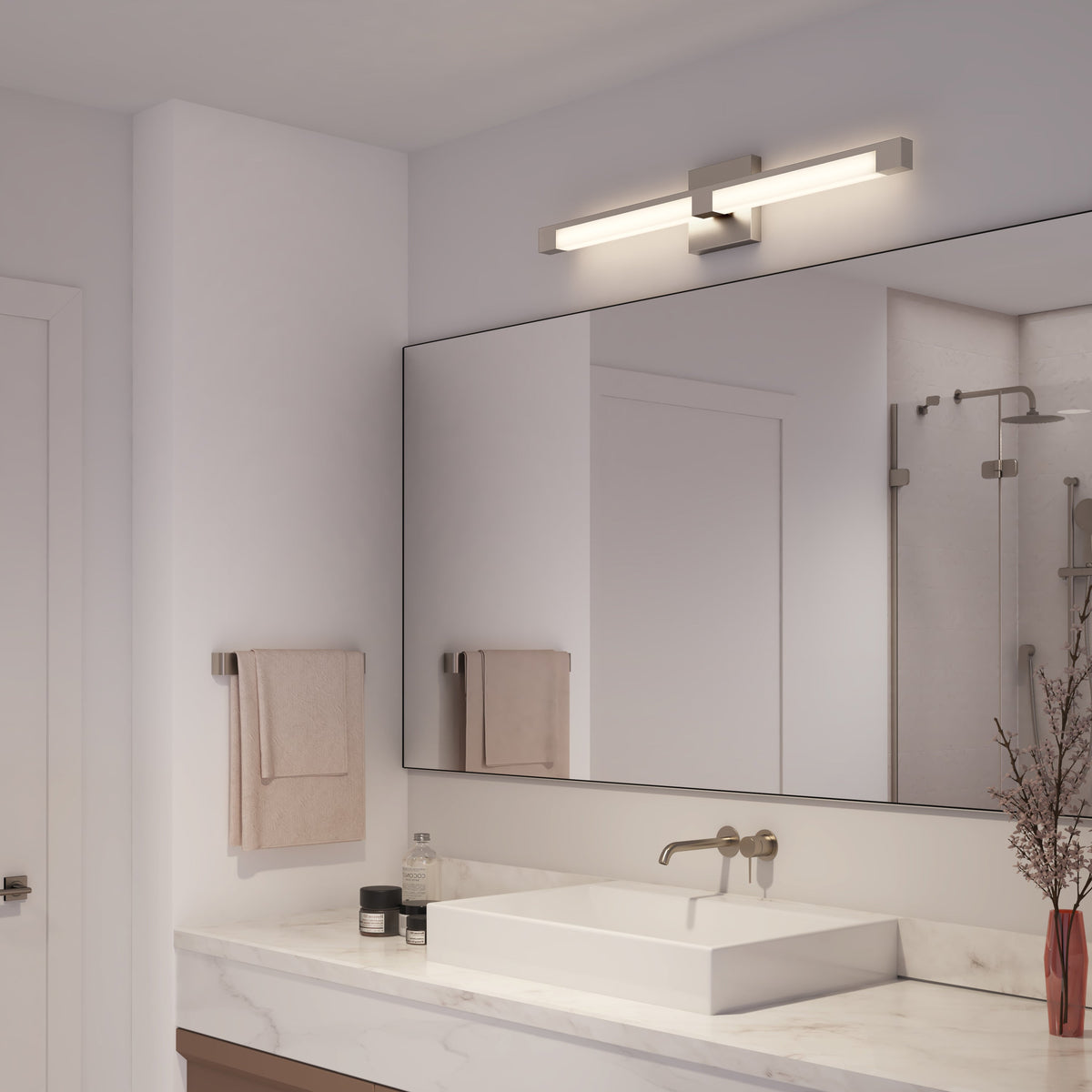
Great bathroom lighting combines bright, colour-accurate vanity illumination (3000K-3500K, 1,500-3,000 lumens) with layered ambient and accent sources to create a space that's both functional for grooming and relaxing for unwinding.
Your bathroom serves multiple purposes throughout the day. You need bright, accurate light for applying makeup and shaving in the morning, then soft, relaxing illumination for evening baths. Most bathrooms fail because they rely on a single overhead fixture that creates shadows exactly where you need clarity most: your face. Smart bathroom lighting uses multiple layers working together to eliminate shadows, provide true colour rendering, and create the perfect atmosphere for every bathroom activity.
Why Does Bathroom Lighting Design Matter?
Poor bathroom lighting affects your daily routine in frustrating ways. Shadows under your eyes and chin make grooming difficult. Inaccurate colour rendering means your makeup looks different in natural light. Harsh overhead lights create an unflattering, clinical atmosphere that works against relaxation.
Functional bathroom lighting solves these problems by providing shadow-free illumination at your vanity, adequate general lighting for safety, and optional accent lighting for ambiance. When done right, your bathroom becomes a space where you can see clearly, make confident grooming decisions, and actually enjoy spending time.
The Three Layers of Bathroom Lighting
Effective bathroom lighting uses three distinct layers: task, ambient, and accent lighting. Each serves a specific purpose and works together to create complete illumination.
Task Lighting: Your Vanity Area
Task lighting is the most critical layer in any bathroom. This is the focused, bright illumination at your vanity where you perform detailed grooming activities.
Vanity lighting should provide 1,500-3,000 lumens of 3000K-3500K light, positioned to illuminate your face evenly without shadows. The best approach is side lighting with sconces flanking your mirror, or a well-designed overhead fixture that distributes light broadly rather than creating a single downward beam.
Artika's Tivoli 5 CCT LED Vanity Light offers adjustable colour temperature and excellent lumen output, making it perfect for vanities of various sizes. The DNA Integrated LED Vanity Light and Bubble Cube Integrated LED Vanity Light provide modern styling with exceptional illumination.
Ambient Lighting: General Illumination
Ambient lighting provides overall room brightness for safe navigation and general visibility. In bathrooms, this typically comes from ceiling-mounted fixtures.
Choose flush mount or semi-flush ceiling fixtures that provide 800-1,500 lumens depending on bathroom size. Small powder rooms (under 40 square feet) need around 800-1,000 lumens, while larger master bathrooms (100+ square feet) benefit from 1,200-1,500 lumens or multiple fixtures.
Artika's bathroom ceiling fixture collection includes numerous options that provide broad, even distribution of light throughout your space.
Accent Lighting: Atmosphere and Ambiance
Accent lighting is optional but adds significant value to bathrooms designed for relaxation. This layer includes toe-kick lighting under vanities, LED strips behind mirrors, or small decorative fixtures that create soft, indirect illumination.
Accent lighting should be dimmable and use warm colour temperatures (2700K-3000K) to create spa-like ambiance during evening baths or relaxation.
What Is the Best Colour Temperature for Bathrooms?
Neutral to warm white (3000K-3500K) works best for bathroom lighting, especially at vanities where accurate colour rendering matters most.
3000K (Warm White) creates a spa-like, inviting atmosphere while still providing clear visibility. It's flattering for skin tones and makes bathrooms feel comfortable rather than clinical.
3500K (Neutral White) offers slightly cooler, crisper light that shows colours more accurately. This is ideal if you apply makeup or need to see fine details with precision.
Avoid 2700K (too warm and yellow, distorts colours) and 5000K+ (too blue and harsh, creates unflattering, hospital-like appearance).
Many Artika bathroom fixtures, including the Tivoli 5 CCT, offer tunable white settings that let you switch between 3000K, 4000K, and 5000K. For bathrooms, the 3000K or 3500K setting typically works best.
For a deeper understanding of colour temperature, see our complete CCT guide.
How Bright Should Bathroom Lighting Be?
Bathrooms require surprisingly bright lighting compared to bedrooms or living spaces because of the detailed tasks performed there.
Total bathroom brightness:
- Small powder room (20-40 sq ft): 2,000-3,000 total lumens
- Standard bathroom (40-80 sq ft): 3,000-5,000 total lumens
- Large master bath (80-150 sq ft): 5,000-8,000 total lumens
Vanity area specifically:
- Single sink vanity: 1,500-2,000 lumens
- Double sink vanity: 2,500-3,000 lumens
These numbers represent the combined output of all fixtures. A typical bathroom might have 1,000 lumens from ceiling ambient lighting plus 2,000 lumens from vanity fixtures, totaling 3,000 lumens.
For detailed information on understanding lumens, read our brightness guide.
Side Lighting vs Overhead Vanity Lighting
The age-old debate: should vanity lights be mounted above the mirror or on both sides?
Side lighting (wall sconces) provides the most flattering, shadow-free illumination. By placing light sources at face level on either side of your mirror, you eliminate harsh shadows under your chin, eyes, and nose. This mimics professional makeup studio lighting and is the gold standard for vanity illumination.
Mount sconces 60-70 inches from the floor and space them 36-40 inches apart (center to center).
Overhead lighting is more common because it's easier to install and works in narrow bathrooms where wall space is limited. Modern overhead vanity fixtures with good light distribution can work well, especially those that spread light broadly rather than creating a single downward spotlight.
Mount overhead fixtures 75-80 inches from the floor, approximately 30-40 inches above your countertop.
The best solution: Combine both. Use an overhead fixture for general vanity area lighting and add side sconces or adjustable task lights for precision grooming. This layered approach eliminates all shadows and provides maximum flexibility.
Bathroom Lighting Ideas by Space Type
Powder Rooms and Half Baths
Small spaces need efficient, well-placed lighting. Use one overhead vanity fixture providing 1,000-1,500 lumens plus a small ceiling fixture for general room lighting (500-800 lumens). Keep finishes coordinated for a cohesive look.
The Bubble Cube Integrated LED Vanity Light works beautifully in powder rooms with its compact, modern design.
Standard Full Bathrooms
These typically include a tub/shower combo and single vanity. Install a vanity light providing 1,500-2,000 lumens, a ceiling fixture for ambient light (1,000-1,200 lumens), and consider a separate shower/tub fixture rated for damp or wet locations (400-800 lumens).
Master Bathrooms
Larger master baths benefit from more elaborate lighting schemes. Use vanity lighting for each sink area (1,500-2,000 lumens each), multiple ceiling fixtures or one larger chandelier-style fixture for ambient light (1,500-2,000 lumens total), dedicated shower lighting (600-1,000 lumens), and optional accent lighting around freestanding tubs or architectural features.
The Tivoli 5 CCT LED Vanity Light provides excellent coverage for larger vanities with its adjustable colour temperature feature.
Special Considerations for Shower and Tub Lighting
Shower and bathtub areas require fixtures specifically rated for wet or damp locations. Look for IP ratings that indicate water resistance.
Recessed ceiling fixtures rated for wet locations work well inside showers. They provide downward illumination without protruding into your shower space. Aim for 400-800 lumens depending on shower size.
Tub areas can use damp-rated fixtures if they're positioned outside the direct spray zone. Many homeowners add dimmable recessed lights or small chandeliers above freestanding tubs to create spa-like ambiance.
Always verify that any fixture used near water has appropriate safety ratings and is installed according to local electrical codes.
Why Dimmable Bathroom Lighting Matters
Dimmable fixtures transform bathroom functionality by allowing you to adjust lighting for different times of day and activities.
Morning grooming: Use full brightness (100%) for detailed tasks like applying makeup, shaving, or styling hair.
Evening routines: Dim to 40-60% for comfortable nighttime face washing and tooth brushing without harsh, sleep-disrupting light.
Relaxing baths: Reduce to 10-20% to create calming, spa-like atmosphere perfect for unwinding.
Night navigation: Keep lights at minimum (5-10%) for safe middle-of-the-night bathroom visits without fully waking yourself.
Most Artika bathroom fixtures work with LED-compatible dimmer switches. For guidance on choosing the right dimmer, see our dimmable LED guide.
Energy Efficiency in Bathroom Lighting
Bathrooms are high-use spaces where lights often run for hours daily. LED fixtures dramatically reduce energy consumption compared to traditional incandescent or halogen bulbs.
A typical bathroom using traditional lighting might consume 150-200 watts. Switching to LED fixtures reduces this to 30-50 watts while providing the same or better illumination. Over a year, this saves significant energy and money.
Artika's LED bathroom collection combines energy efficiency with excellent light quality, typically lasting 25,000-50,000 hours compared to 1,000-2,000 hours for traditional bulbs.
Common Bathroom Lighting Mistakes to Avoid
Using only one overhead ceiling fixture: This creates shadows on your face and provides inadequate vanity illumination. Always add dedicated vanity lighting.
Choosing fixtures with cool colour temperatures (4000K+): These make bathrooms feel cold and clinical while rendering skin tones unflattering. Stick with 3000K-3500K.
Installing non-dimmable fixtures: You're forced to choose between too bright or completely off with no flexibility for different activities.
Ignoring moisture ratings: Standard fixtures fail quickly in damp bathroom environments. Choose fixtures rated for bathroom use, especially near showers and tubs.
Positioning vanity lights too high: Overhead fixtures mounted at ceiling height rather than 30-40 inches above the counter create harsh downward shadows.
How to Create Perfectly Lit Bathrooms
Great bathroom lighting combines bright, accurate vanity illumination with layered ambient and accent sources. Start with dedicated vanity fixtures providing 1,500-3,000 lumens of 3000K-3500K light positioned to illuminate your face evenly. Add ceiling-mounted ambient lighting for overall room brightness and safety. Consider dimmable options throughout to adjust lighting for morning tasks versus evening relaxation.
The key is treating your bathroom as a multi-functional space that needs lighting flexibility. Bright, accurate light for grooming. Soft, relaxing light for unwinding. Safe, minimal light for nighttime navigation. When you layer these elements thoughtfully, your bathroom becomes both highly functional and genuinely enjoyable.
Explore Artika's complete bathroom lighting collection to find fixtures that combine style, efficiency, and exceptional illumination.