
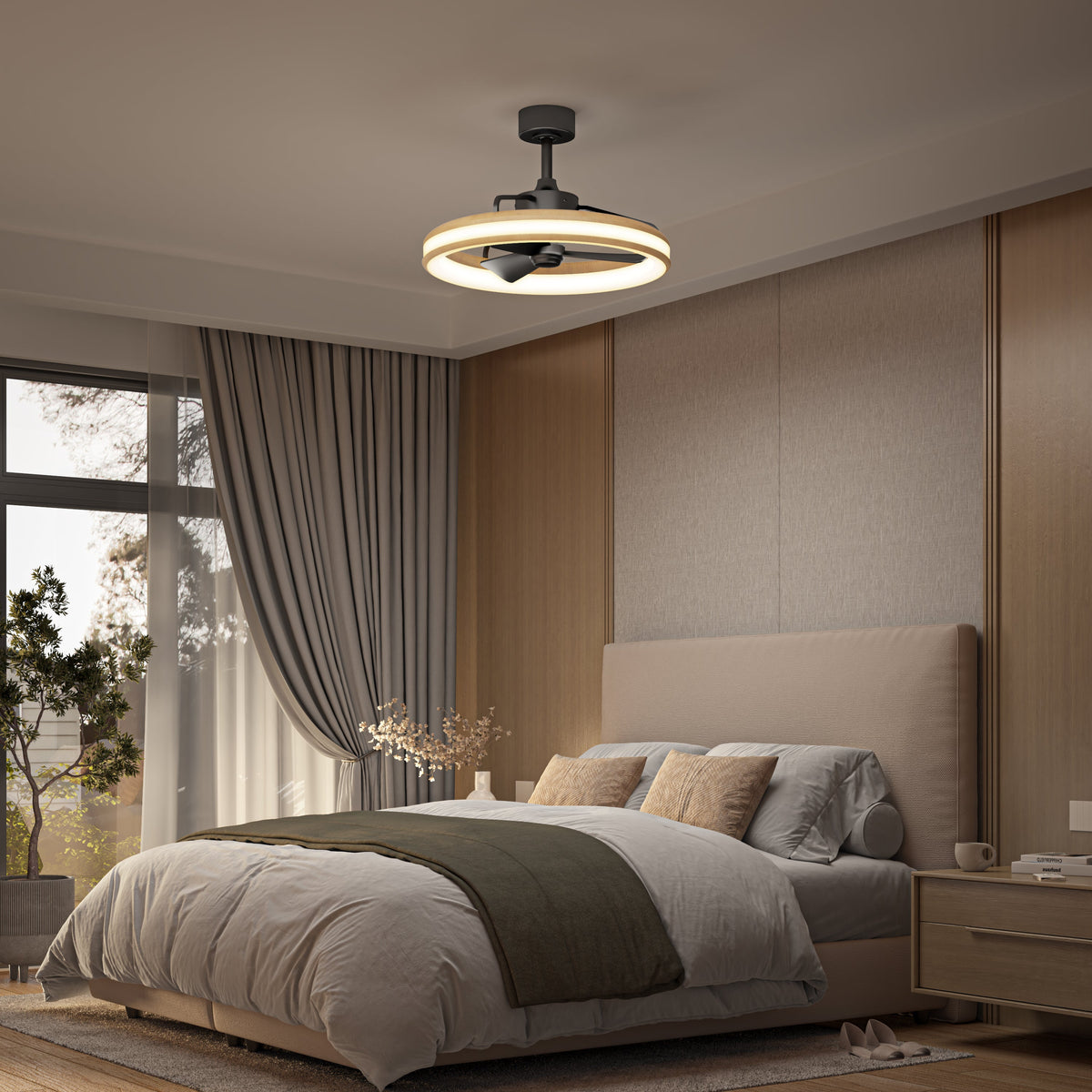
Sleep-friendly bedroom lighting combines warm colour temperatures (2700K-3000K), dimmable fixtures, and layered light sources to support your body's natural sleep-wake cycle while providing functionality when you need it.
Your bedroom should be a sanctuary where you relax, unwind, and get restorative sleep. Yet many bedrooms have harsh overhead lighting that's either too bright or leaves you fumbling in the dark. The right bedroom lighting does more than illuminate your space. It supports healthy sleep patterns, creates calming ambiance, and provides task lighting exactly where you need it. Here's how to design bedroom lighting that works with your body's natural rhythms rather than against them.
Why Sleep-Friendly Lighting Matters
Light is the most powerful signal to your body's internal clock, or circadian rhythm. Bright, blue-toned light tells your brain it's daytime and suppresses melatonin production, keeping you alert. Warm, dim light signals evening and allows melatonin levels to rise naturally, preparing you for sleep.
Poor bedroom lighting disrupts this natural cycle. Bright overhead lights used right before bed can delay sleep onset by 30 minutes or more. Cool-toned lights (5000K+) mimic midday sun and can reduce sleep quality even after you turn them off.
Sleep-friendly lighting works with your biology. Warm colour temperatures (2700K-3000K) in the evening support natural melatonin production. Dimmable fixtures let you gradually reduce light levels as bedtime approaches. Multiple light sources eliminate the need for harsh overhead lighting while providing flexibility for different activities.
For a deeper understanding of colour temperature, read our complete CCT guide.
What Is the Best Colour Temperature for Bedrooms?
Warm white (2700K-3000K) is ideal for bedroom lighting. This range creates a cozy, relaxing atmosphere that signals to your body it's time to wind down.
2700K produces soft, amber-toned light similar to traditional incandescent bulbs. It's extremely warm and calming, perfect for bedrooms where relaxation is the priority.
3000K offers slightly brighter, more neutral warm light. It still feels cozy but provides better visibility for tasks like reading or getting dressed. This is the sweet spot for most bedrooms.
Avoid 4000K+ in bedrooms. These cooler temperatures feel energizing rather than relaxing and can interfere with sleep preparation. Save daylight-toned lighting (5000K+) for workspaces and task areas, not sleeping spaces.
Many Artika fixtures offer adjustable colour temperature, allowing you to switch between 3000K, 4000K, and 5000K. For bedrooms, set these fixtures to their warmest 3000K setting. The Optical 3 CCT LED Pendant and similar tunable options give you this flexibility.
How Bright Should Bedroom Lighting Be?
Bedrooms need 1,000 to 2,000 total lumens from all light sources combined, depending on room size. This is significantly less than kitchens or bathrooms because bedrooms prioritize ambiance over task visibility.
A typical bedroom breakdown:
- Main ceiling fixture: 800-1,200 lumens (provides general ambient light)
- Bedside lamps (each): 400-600 lumens (for reading and tasks)
- Accent lighting: 200-400 lumens (decorative wall sconces or LED strips)
The key is having multiple lower-lumen sources rather than one super-bright overhead fixture. This creates softer, more layered illumination that's easier to adjust for different moods and activities.
For more details on understanding lumens, see our brightness guide.
Layering Bedroom Light: The Three Essential Types
Sleep-friendly bedroom lighting uses three layers: ambient, task, and accent lighting. This approach gives you complete flexibility from bright functional lighting to soft evening ambiance.
Ambient Lighting: Your Main Illumination
Ambient lighting provides overall room illumination. In bedrooms, this typically comes from a ceiling fixture or flush mount.
Choose dimmable flush mount or semi-flush ceiling fixtures that provide 800-1,200 lumens at full brightness. Dimming capability is essential. You need bright light when cleaning or organizing but soft light in the evening.
Artika's ceiling and flush mount collection offers numerous dimmable options perfect for bedroom ambient lighting. Look for fixtures with warm colour temperatures and smooth dimming ranges down to 10 percent or lower.
Placement tip: Center your main fixture in the room, not directly over the bed where it can shine in your eyes when lying down.
Task Lighting: Focused Brightness Where You Need It
Task lighting provides focused illumination for specific activities like reading, getting dressed, or working on a laptop in bed.
Bedside lamps or wall sconces are the most common bedroom task lights. Each should provide 400-600 lumens of warm white light. Wall-mounted reading lights or adjustable arm lamps work beautifully because you can direct light exactly where needed without illuminating the entire room.
Artika's wall sconce collection includes options ideal for bedroom reading. Mount sconces 55-65 inches from the floor on either side of the bed for perfect reading height without disturbing a sleeping partner.
For detailed wall sconce guidance, read How to Decorate With Wall Sconces.
Closet and dresser areas also benefit from dedicated task lighting. Small LED fixtures or under-cabinet style lights help you select outfits and see details clearly without flooding the entire bedroom with bright light.
Accent Lighting: Creating Ambiance and Interest
Accent lighting adds visual interest and creates soft, indirect illumination perfect for evening relaxation.
Options include:
- LED strip lights behind headboards or under bed frames
- Picture lights highlighting artwork
- Small table lamps on dressers or shelving
- Decorative string lights for gentle ambient glow
Accent lighting should be the dimmest layer, typically 200-400 lumens total, and always use warm colour temperatures (2700K-3000K).
Why Dimmable Lighting Is Non-Negotiable for Bedrooms
Dimmable fixtures are essential for sleep-friendly bedroom lighting. They allow you to adjust brightness throughout the day and evening to support your natural rhythms.
Morning and daytime: Use brighter settings (70-100%) when getting ready, cleaning, or doing tasks that require good visibility.
Evening (2-3 hours before bed): Begin dimming to 40-50% to signal to your body that bedtime is approaching. This gradual reduction supports natural melatonin production.
Bedtime routine: Dim to 10-20% for the final hour before sleep. This minimal lighting is enough to navigate safely while preparing your body for rest.
Night navigation: Keep lights at their lowest setting (5-10%) if you need to move around after bedtime.
Most Artika fixtures are dimmable when paired with LED-compatible dimmer switches.
Bedroom Lighting Ideas by Room Style
Small Bedrooms (Under 120 Square Feet)
Focus on space-saving solutions. Use a flush mount ceiling fixture for ambient light (800-1,000 lumens) and wall-mounted sconces or swing-arm lamps for task lighting. This eliminates bulky bedside tables while providing excellent functional lighting.
Master Bedrooms (150-250 Square Feet)
Larger bedrooms benefit from more elaborate layering. Install a semi-flush or small chandelier for ambient light (1,000-1,500 lumens), add bedside lamps or sconces for task lighting, and incorporate accent lighting like LED strips or decorative table lamps for ambiance.
Guest Bedrooms
Prioritize versatility with simple, effective lighting. A dimmable ceiling fixture provides all-purpose illumination, while one or two table lamps offer bedside reading light. Keep it uncomplicated so guests can easily adjust lighting to their preferences.
Smart Lighting for Better Sleep
Smart lighting systems take bedroom illumination to the next level by automating your lighting routine to support healthy sleep patterns.
Features that promote better sleep:
- Scheduled dimming: Automatically reduce brightness starting 2-3 hours before your target bedtime
- Gradual wake-up: Slowly increase light in the morning to simulate sunrise, helping you wake naturally
- Voice control: Adjust lighting without getting up or using your phone (which emits sleep-disrupting blue light)
- Away mode: Create the appearance someone's home by scheduling realistic lighting patterns
Smart bulbs and fixtures must still use warm colour temperatures and appropriate brightness levels. Technology enhances good lighting design but can't compensate for cool-toned or overly bright fixtures.
Common Bedroom Lighting Mistakes to Avoid
Using only overhead lighting: Relying solely on one ceiling fixture creates harsh, unflattering light with no flexibility. Always layer multiple sources.
Choosing cool colour temperatures: 4000K+ fixtures in bedrooms disrupt sleep patterns. Stick with 2700K-3000K exclusively.
Installing non-dimmable fixtures: Without dimming capability, you're forced to choose between too bright or completely off, with no middle ground for evening relaxation.
Positioning lights directly over the bed: Overhead fixtures centered over where you sleep shine in your eyes when lying down. Center ceiling fixtures in the room instead.
Using blue-enriched "daylight" bulbs: These are marketed as energizing, which is the opposite of what bedrooms need. Reserve daylight bulbs (5000K+) for offices and workspaces.
How to Create the Perfect Sleep-Friendly Bedroom
Sleep-friendly bedroom lighting combines warm colour temperatures, layered light sources, and dimmable fixtures that adapt to your needs throughout the day. Start with a dimmable ceiling fixture providing 800-1,200 lumens of 3000K light for ambient illumination. Add bedside task lighting through lamps or wall sconces offering 400-600 lumens each. Finish with subtle accent lighting for evening ambiance.
Most importantly, dim your lights progressively in the 2-3 hours before bedtime. This simple habit supports your body's natural melatonin production and signals that it's time to wind down. The result is better sleep quality, easier mornings, and a bedroom that truly functions as a restful sanctuary.
Explore Artika's complete lighting collection to find dimmable fixtures in warm colour temperatures perfect for creating your sleep-friendly bedroom. For additional guidance on choosing the right brightness and understanding energy savings, visit our lighting education guides.