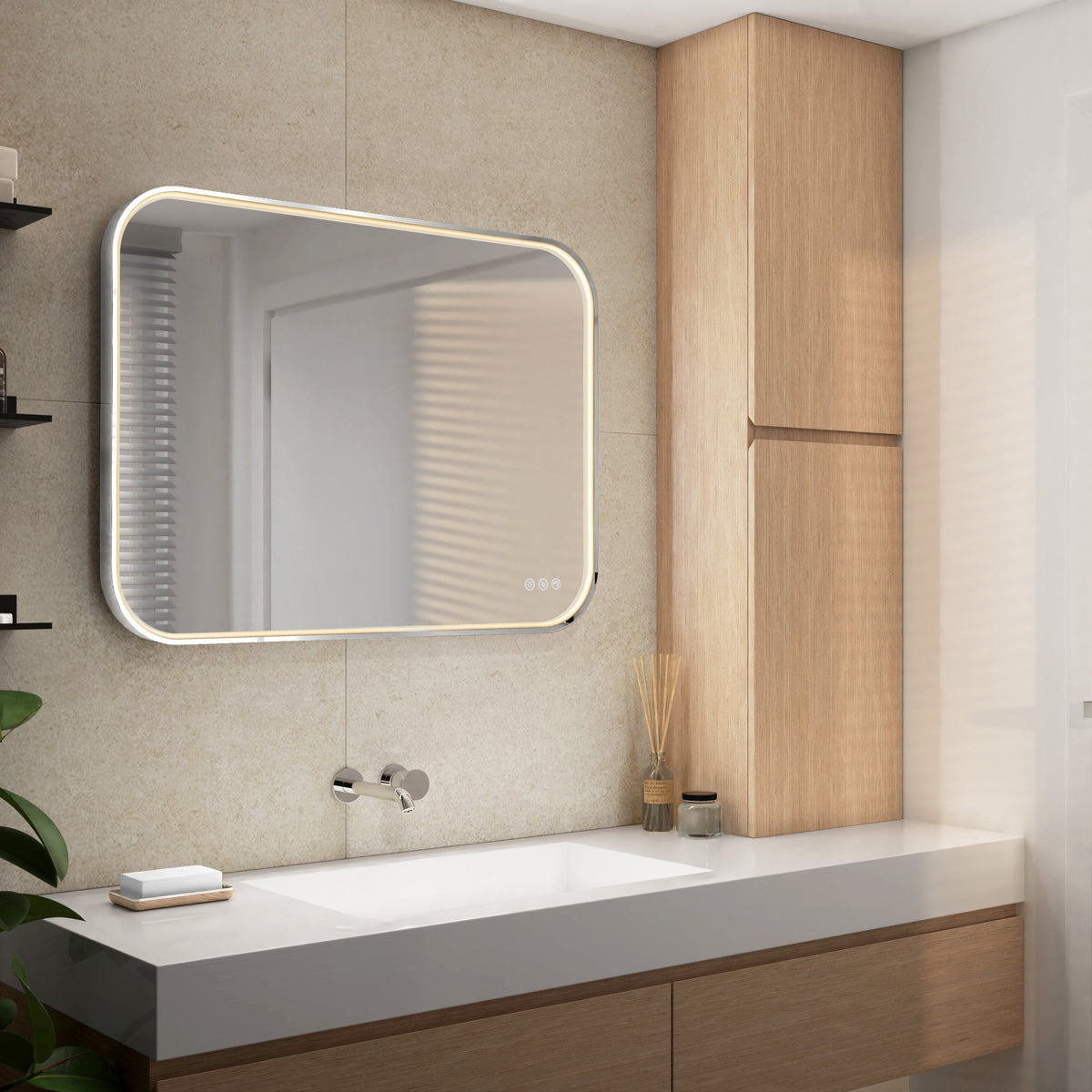
The best bathroom light fixtures for 2026 combine 1,500 to 3,000 lumens of task lighting at the vanity, a color temperature between 3000K and 3500K, and a fixture sized to about 75 percent of the mirror's width. The trend designers settled on this year is layered light with adjustable color temperature, not the single overhead can light most bathrooms still rely on.
Most renovation budgets spend thousands on tile and countertops, then pick up whatever vanity bar is on sale at the hardware store. Six months later, the bathroom looks beautiful in daylight and unflattering at the mirror. Lumens measure how much visible light a fixture puts out, and a good bathroom needs plenty.
What Are the Top Bathroom Lighting Trends in 2026?
Three patterns have taken over bathroom design this year. Programmable color temperature is the biggest. Fixtures with 3 or 5 CCT (Correlated Color Temperature) settings let a single light shift between cool white for morning grooming and soft warm light for evenings, with no bulb swapping required.
Brass, aged nickel, and matte black have replaced polished chrome as the default finish, especially for renovations done in neutral palettes. Sculptural shapes (single domes, ring sconces, slim linear bars) have replaced the 4-light Hollywood chrome bar that dominated builder-grade bathrooms for two decades.
None of these are aesthetic gimmicks. Tunable CCT supports natural circadian rhythms, with cooler light waking you up and warmer light helping you wind down. Warm metals hold their look longer than polished chrome, which spots and dates quickly. Sculptural fixtures pack visual interest into the half baths and powder rooms where wall space is tight, and Artika's bathroom vanity light collection reflects all three trends in one place.
Vanity Lighting Is the One Upgrade That Matters Most
The fixture above or beside your mirror affects how you look more than any other light in the house. A weak vanity light creates shadows under your eyes and on your chin. A good one (1,500 to 3,000 lumens at the mirror, with the bulbs hidden behind a diffuser) renders skin tone accurately and eliminates those shadows entirely.
The benchmark designers use: a vanity fixture should be roughly 75 percent of your mirror's width, mounted 65 to 70 inches above the floor. For tunable CCT models, the Crystal Cube 5 CCT vanity light is a current pick at 1,300 lumens with five selectable shades of white. Its three crystal-like diffusers in a matte black frame catch light from multiple angles instead of glaring straight out at the mirror.
Side Lighting vs Overhead Vanity Lighting
The gold standard for vanity lighting is two fixtures flanking the mirror at face height, around 65 to 70 inches off the floor. Side lighting eliminates the shadow that overhead-only setups create on your eyes, nose, and chin. It's how every quality hotel bathroom lights the mirror.
Overhead is more common because the electrical box is usually already up there. It works fine as long as you accept the trade-off: more shadow on the face, and more reliance on a wide bar fixture (24 inches for a 32-inch mirror, 36 to 40 inches for a 48-inch mirror) to spread light across the whole vanity.
The honest answer most designers land on for full bathrooms is to do both. Sconces on the sides for face light, plus a small ambient fixture on the ceiling to brighten the room overall. For powder rooms and half baths used briefly, overhead alone is plenty.
How to Size a Vanity Light to Your Mirror
The 75 percent rule is the easiest place to start. Measure the mirror's width and look for a fixture about three-quarters as wide. A 36-inch mirror takes a 27-inch fixture, a 48-inch mirror takes a 36-inch fixture, and a 60-inch mirror takes a 45-inch fixture.
For double vanities with two sinks and two mirrors, skip the long single bar that spans both. Use two separate fixtures, one centered over each mirror. The light distributes evenly at both sinks instead of creating a hot spot in the middle and shadows on the outside edges.
Watch the ceiling-fixture lumens too. Ambient lighting for the room should hit roughly 70 to 80 lumens per square foot. A typical 5-by-8-foot full bath needs around 3,000 lumens of ambient light, separate from the vanity task lighting. A 1,500-lumen flush mount handles half of that on its own.
Bathroom Lighting Mistakes to Avoid
The single biggest mistake is relying on one ceiling fixture for the whole bathroom. The room ends up bright at the door and dim at the mirror, with shadows in all the wrong places.
The second is choosing a fixture rated for dry locations and putting it in a bathroom. Anything inside a bathroom needs to be at minimum damp-rated, with a UL or ETL label on the box confirming it. Above a tub or inside a shower zone you need wet-rated. Damp means no direct water contact, while wet means direct exposure.
The third is picking 5000K daylight bulbs because they are labeled “natural white.” They’re too cool for a bathroom. Skin reads gray, makeup looks off, and the room feels institutional. Stay in the 3000K to 3500K range for vanity light, or pick a fixture with tunable CCT so you can shift between both.
The full setup for a modern bathroom: vanity fixture sized at 75 percent of the mirror's width and mounted at face height, ambient ceiling fixture providing 70 to 80 lumens per square foot, both in the 3000K to 3500K range with dimming. Browse Artika's bathroom collection for fixtures designed around those specs.
Frequently Asked Questions
How many lumens does a bathroom need?
A standard full bath needs around 70 to 80 lumens per square foot of ambient light, plus 1,500 to 3,000 lumens of task light at the vanity. A 5-by-8-foot bathroom works out to roughly 3,000 ambient lumens plus the vanity load. Add a dimmer so the same fixture handles bright grooming hours and dim midnight runs. Powder rooms need less, with about 4,000 total lumens across all sources covering a 25-square-foot space.
What is the best color temperature for bathroom lighting?
3000K to 3500K is the best range, warm enough to flatter skin tone and cool enough to read makeup and skin clearly. Anything at 5000K or above feels clinical and washes the face out, while anything below 2700K skews too yellow for grooming. If you want both extremes from one fixture, look for a tunable CCT model with 3 or 5 settings. Those have become standard on quality vanity lights.
How wide should a vanity light be?
About 75 percent of the mirror's width. A 36-inch mirror takes a 27-inch fixture, and a 48-inch mirror takes a 36-inch fixture. For a double vanity with two separate mirrors, use two separate fixtures (one centered over each sink) instead of a single long bar across the entire countertop. The light distributes more evenly that way, with no dim zone between the sinks.
Do bathroom light fixtures need to be damp-rated?
Yes. Every fixture inside a bathroom should carry at minimum a damp-location rating, and fixtures inside the shower or directly above the tub need to be wet-rated. Damp means no direct water contact; wet means direct exposure. The UL or ETL label on the box tells you which one you’re holding, and most modern LED bathroom fixtures meet damp-rated standards by default.